High in the Bolivian mountains lies the city of Cochabamba, also known as Khocha Pampa, the “Land of Small Lakes”.
Water flows abundantly in this region, with lagoons and fast rivers surrounding the city. Paired with its mild climate and fertile soil, Cochabamba could have been the perfect cradle of excess and abundance. Unfortunately, due to privatization and shady geopolitical deals, the residents of this city found themselves facing off against powerful corporations. These companies aimed to control their most vital resource: their access to water.
From 1999 to 2000, officials in Bolivia made a series of grave decisions that led to months of water shortages, protests and violence. This event, known as the Cochabamba Water War, highlights the revolutionary spirit of Bolivians who stood up to privatization and foreign interference.
From Dictatorship to Democracy
In Bolivia, the 1980s saw a political evolution from strict military dictatorships to the restoration of democracy and elections. Although the political climate in the country was beginning to stabilize, the economic forecast was incredibly grim.
Extreme government spending during this period essentially depleted the country’s financial reserves. To remedy this, for some egregious reason, the government decided to print more money. This single choice led to a catastrophic domino effect that caused decades of financial hardships to follow.
Printing more money doesn’t make a country richer; it only devalues the local currency.
With the devaluation of the peso, Bolivia had a predictably hard time paying off its private loans. Inflation was at an all-time high, and the country could not secure much foreign investment or local growth.
With this devastating trifecta of hyperinflation, high debt and GDP decline, the answer, proposed by the Estenssoro administration, was to seek out more loans.
Both the World Bank and the International Monetary Fund were eager to extend loans to Bolivia, albeit under very strict conditions. At first, the Bolivian governments of the 80s and early 90s fulfilled these loan conditions. They clamped down on imports, reduced government spending, and raised exports.
Bolivia was doing so well that in 1996, the IMF relieved a significant portion of the country’s external debt.
For some countries, the IMF and World Bank are fair and positive institutions to conduct business with. For others, especially those in the third world, dealing with the World Bank or the IMF was akin to dancing with the devil. The people of Cochabamba would soon come to share this sentiment.
Externalities and Privatization
One of the main tasks the IMF gave Bolivia was to implement reforms that would privatize public enterprises. The IMF saw many of the public systems in developing countries as corrupt and unequal. They argued that resources should not be controlled by inadequate governments but should be led by corporations instead. This, according to their logic, would ensure equal distribution of resources while opening the gates to investment, thus boosting GDP.
In order to ensure the continuation of loans, Bolivia had to conform to these demands to privatize its oil mining industries, railroad systems, and ultimately the water supply system in Cochabamba.
On one hand, the IMF might be on to something. No matter what country you live in, everyone knows that the government is slow. The water in Cochabamba at the time was managed by the SEMAPA, a state agency that was often inefficient at supplying stable service that met the needs of the city’s growing population. Perhaps it would be better if a private company that prioritized efficiency and customer support took over the operation.
In theory, this approach is solid, but in reality, very few corporations actually prioritize the customer. Corporations are obsessed with externalities that boost profits. Most companies aim to have other parties (oftentimes their own customers) solve problems for them so they can continue to earn profits without having to allocate expenses.
Let’s pretend that you live right next door to a restaurant that dumps piles of garbage on the sidewalk every night. Every night, without fail, you go outside to clean it up for free. The restaurant owner benefits from having a pristine storefront at your expense, while the workers get to end the night without having to clean. You are the externality.
Large corporations love doing this, and Aguas del Tunari was no exception.
Aguas del Tunari Takes Control
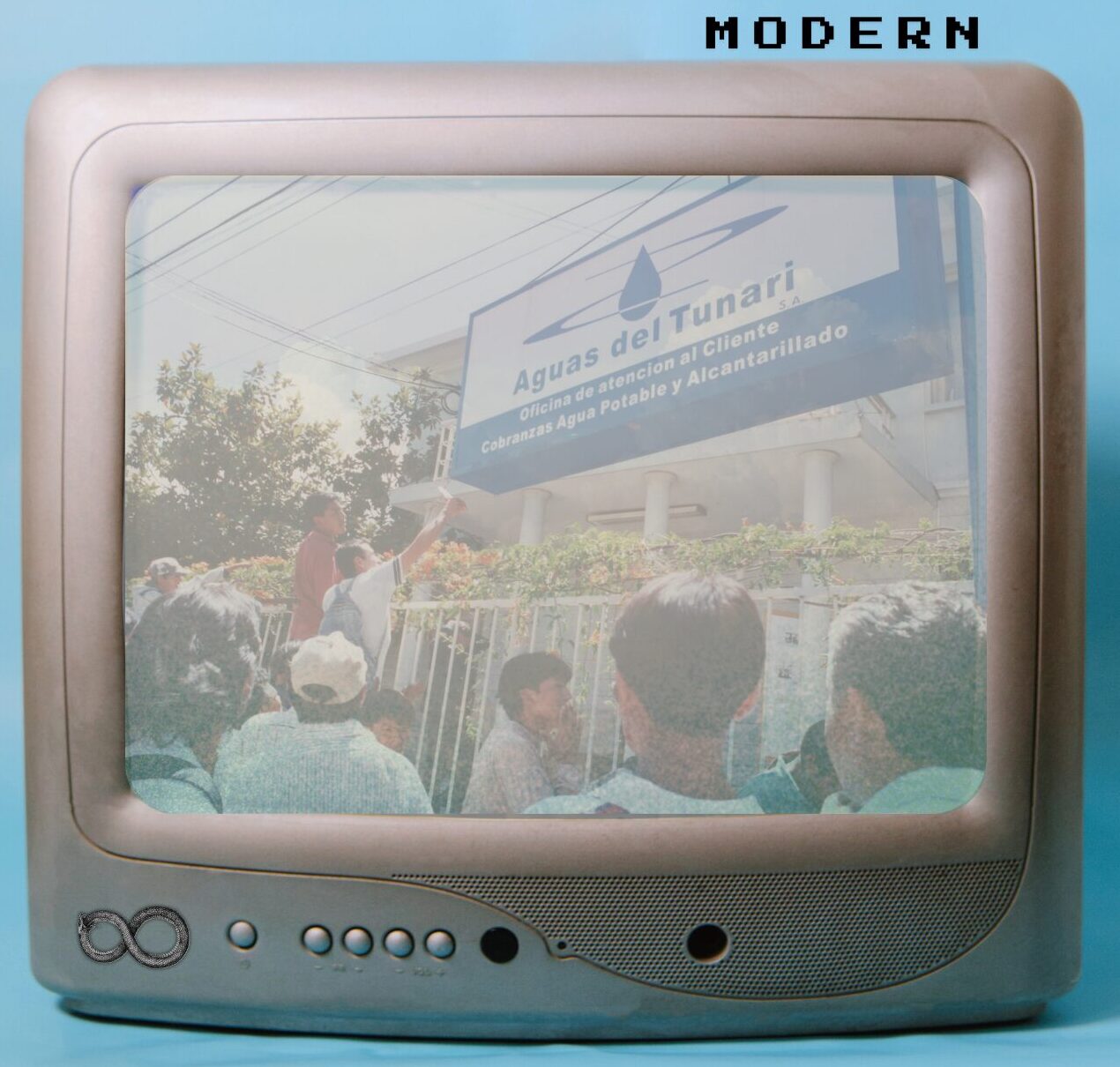
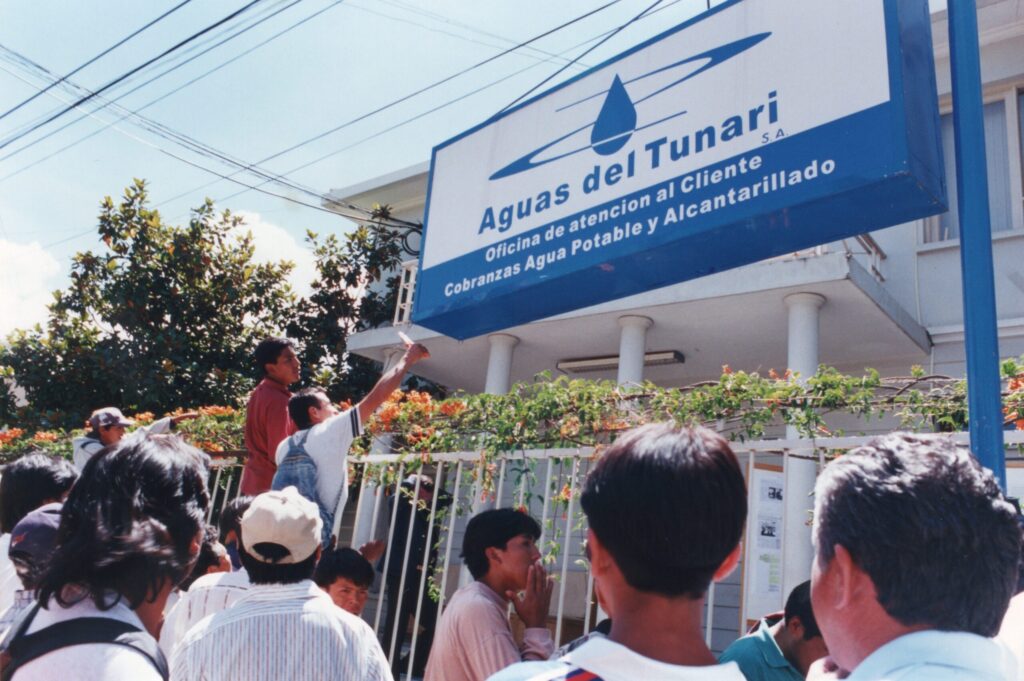
With growing pressure from the IMF, the Bolivian government, under the Banzer administration, placed SEMAPA up for auction to be purchased by the highest bidder. Before long, a British corporation named Aguas del Tunari stepped in to take control with promises of improving coverage and water quality.
To make things easier for Aguas del Tunari, the government signed a 40-year contract and passed Law 2029 that effectively gave the company control over all the water sources in the region. To hold up their end of the contract, Aguas del Tunari had to expand the water system and complete the dam project that had been neglected for years under SEMAPA.
Aguas del Tunari had no intentions to pay for that dam project. They didn’t want to do it in the first place and only agreed at the behest of the Cochabamba mayor, Manfred Reyes Villa.
When it was time to deliver on their promises, they treated the people of Cochabamba as externalities. To pay for the dam, Aguas del Tunari significantly hiked the water rate to fees that no average Cochabambino could afford. Before privatization, working people in the city earned an average of $80-$100/month while paying about $5/month on their water fees. Aguas del Tunari started charging $20/month almost immediately.
This abrupt and absurd price hike was the start of the tensions leading to the Water War.
The Revolution Begins
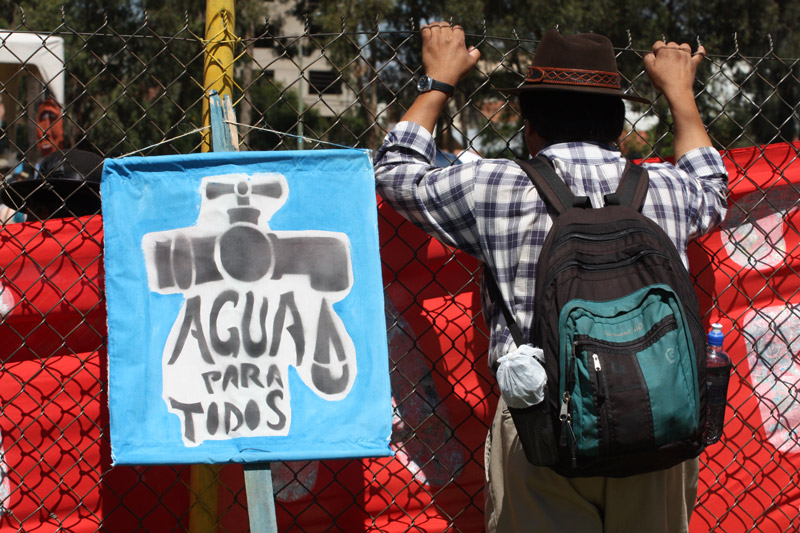
At first, the response from residents was measured and non-violent. Locals organized themselves into groups like the Coordinadora, which consisted of farmers, factory workers, street vendors, engineers and university students.
On 11 January 2000, they staged a mass protest calling for the rapid repeal of the water bill hikes and the total cancellation of the Aguas del Tunari contract. They also wanted privatization legislation, like Law 2029, to be modified by the government.
The residents soon escalated to blocking roads and disrupting the commercial areas of the town. They clogged up the streets with their bikes and encouraged people to stop working. The protestors’ rage grew as the government promised to reexamine the contract, but not the water fees.
In early February, the lighthearted nature of the protest would transform into something much darker. On 4 February 2000, the Coordinadora organized the ‘taking of Cochabamba’ event, which was met with heightened police presence.
University students spilled into the streets, small children laid down tacks and sharp objects to demobilize police vehicles, the elderly banged pots and pans in support of the protestors, and residents welcomed the injured into their homes and nursed their wounds. In total, 175 demonstrators were wounded by either tear gas or police weapons, while two were blinded.
The more people the police arrested and brutalized, the more residents showed up. At the height of the protests, some 70,000 attended to voice their displeasure with the IMF, the Aguas del Tunari and of course the government.
On 8 April 2000, Banzer declared a state of emergency, and the police did what they always do. Mass arrests, beatings and shootings followed, which would unfortunately escalate to the infamous killing of Víctor Hugo Daza. The rebellion now had its martyr.
The killing of Víctor Hugo Daza was truly the beginning of the end. The unfortunate loss was televised and served as the fuel that inspired even more protestors to join in. The executives at Aguas del Tunari were chased out of town and forced into hiding in the department of Santa Cruz.
On 10 April 2000, the government agreed to the removal of the Aguas del Tunari and the cancellation of the contract. The control of Cochabamba’s water supply was returned to SAMAPA, with members of the Coordinadora granted positions on the board of directors.
A Rare Win
The resolution of the Cochabamba Water Wars is something we don’t often see in the realm of revolutions. Yes, individuals sadly lost their lives and faced horrific police brutality. However, given the government’s initial response, it seemed as though they had no issue continuing the Water Wars and arresting the entire city if they needed to. It was really the publicized death of Víctor Hugo Daza and the abandonment by the Aguas del Tunari office that really skewed the odds in favour of the people.
Over the next five years, protests against water privatization spread to other cities in Bolivia. The people knew that agencies like SEMAPA weren’t perfect, but they also knew that entrusting foreign companies with their vital resources was far worse.
The Cochabamba Water War teaches us the importance of collective activism. From the farm workers to the engineers, the Cochabambinos shed their labels of class and rank to come together as one. Similar to the workers at Dier el-Medina, the Cochabambinos united as one voice and shared a single mission: to halt the privatization of water.
Two decades later, the Cochabamba Water War remains a powerful piece of Bolivian history. It stands as a testament that ordinary people can achieve extraordinary things when they act together.
Water is a human right and should never be controlled by any corporation, especially not a foreign entity.