

Discover how Egyptian tomb builders led the world’s first labour strike — and what their courage teaches us about justice today.
Protesting is not a modern invention.
Long before civil liberties or social media hashtags became the norm, ordinary people took to the streets of their ancient cities to unleash their frustrations and demand fair treatment.
It is hard to pinpoint the date of the first-ever protest, but we do know the time, place and cause of the first workers’ strike in recorded history.
One of the most important jobs to have in ancient Egypt was that of a tomb-builder. These skilled artisans crafted tombs meant to guide nobles into the afterlife. The job was mostly hereditary, being passed down through the family, and builders lived together in special villages.
To this day, their work is still being studied, visited, and appreciated. They were respected central figures in society, and for that, they were well paid—most of the time.
When Hunger Turns into History
When officials did their jobs, the builders would receive payment in rations of grain and beer. During periods of heavy corruption or invasion, officials would hoard resources, delay payment and offer false promises instead.
This is what happened to the workers of Deir el-Medina (also known as Set Ma’at) during the reign of Ramses III of the 20th Dynasty.
As the 30th anniversary of the pharaoh’s rule was getting closer, officials in Egypt were more focused on planning an extravagant party than paying their workers. The nobles knew the builders hadn’t been paid, but still delayed and ignored them. Days turned into weeks, which turned into almost a month of waiting.
How long can you go without food? What would you do if your boss suddenly stopped paying you?
Most of us would file reports, expose our workplaces on social media, march, walk out or go on strike!
But for the workers of Deir el-Medina, the mere thought of protesting the elite was unheard of; it went against the nature of their society.
One important feature of ancient Egyptian life was the philosophy of ma’at. This principle encouraged everyone at all levels to respect order, authority, and balance. It was shameful to cause chaos, but as each day ended without pay, the workers had very little choice.
There are countless examples of ancient revolutions that reshaped societies. From the Secession of the Plebs to the revolts of Spartacus, the yearning for freedom is imprinted in our human history.
It was monumental of them to abandon the structures of their society, set aside their uncertainties, and stand up for their rights. Their sacrifice back then laid the foundations for a lot of the activism tactics we use today. There are many lessons we can learn from the men of Deir el-Medina.
Lesson One: Know Your Worth
On the eighteenth day without food or pay, the workers dropped their tools. The once-busy work site fell silent. A historic moment was about to begin.
They staged a walkout in November of 1153 BCE and marched from Medinet-Habu to the tombs of Thutmose III, where they participated in a sit-in.
Along the way, they chanted, “We are hungry! There is no clothing, no ointment, there is no fish!”
Instead of listening to and understanding the pain of the workers, officials decided to placate them by offering food to select builders and promising to fix the problem immediately. This promise was empty, and the lack of payment continued for years.
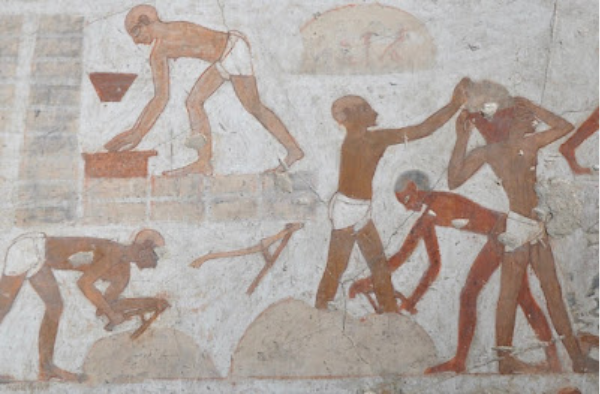
Soon, it became clear that protesting was the only way to hold the upper class accountable. Late payments were not delivered unless workers went on strike.
Site officials had the opportunity to address the issue with respect, honesty, and professionalism. Instead, they decided to pacify the builders in hopes that they would abandon their cause. They did not. The tomb-builders of Deir el-Medina knew their work was sacred — and they refused to let that sacred duty be exploited. Their labour strike became a statement not just about food, but about fairness.
Lesson Two: Collective Activism
One name stands out when discussing the history of the Deir el-Medina strikes. Amennakht was the scribe and negotiator who recorded the story on what is now known as the ‘strike papyrus.’
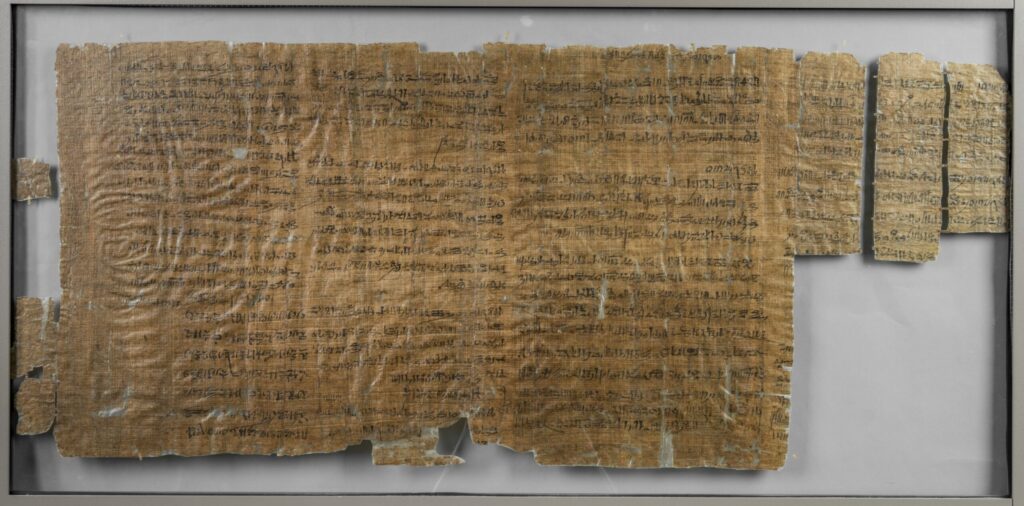
Despite the Egyptians’ love for documentation, the strike story never appears in royal records. If it weren’t for Amennakht, this vital piece of activism history would’ve been lost forever. Although only one name from Deir el-Medina survived the annals of time, the strike was a collective effort by all the labourers. They acted together in a unified front that was impossible to ignore.
When the men marched through the desert roads, they moved as a single unit–step after step, shoulder to shoulder. The sound of their voices vibrated through the streets, not as a collection of complaints, but as a demand for justice.
Their actions remind us that change rarely stems from one person alone. We need to collaborate efficiently to send a strong singular message.
Lesson Three: Activism is Your Voice
At this time in history, the builders did not have elections or petitions. When their frustration boiled over, they faced a stark choice: starve or stand up.
Activism gave them a voice to stand against the corruption of the upper class and send a message that resonated for centuries to come. To the workers, disturbing ma’at — the sacred balance of the universe — was unthinkable.
Chaos was the enemy of their society. Yet injustice is its own kind of chaos. As their grain supply dwindled and their families went unfed, the builders realized that silence wasn’t justice.
Their courage reminds us that activism isn’t chaos — it’s the voice that forces a broken system back into balance.
Lesson Four: The Fight for Dignity Never Ends
In a perfect world, the Deir el-Medina workers would only need to strike once to have their grievances solved.
In reality, it took years for any permanent change to take place. The upper-class site officials, who routinely misappropriated the grain, looked for any reason not to pay the workers.
They were more focused on planning the Heb-Sed festival celebrations for the pharaoh than addressing the workers’ suffering.

However, when the chief of police, Montumes, refused to get deeply involved, the officials had no choice but to deal with the protestors directly. They continued to deliver false and empty promises, which led to more and more strikes over the years.
Every time the officials failed to pay in full, the workers organized and demonstrated, ensuring that they would never again be silent.
The tomb-builders at Deir el-Medina learned that once justice was delivered, it needed to be defended. We cannot get too comfortable, and we must always be prepared to speak up.
From Stone to Social Media
We have to remember that freedom and justice are continuous struggles.
The liberties we enjoy today were fought for by our ancestors and can be erased at any moment. Every time ordinary people demand fair treatment, they echo the spirit of those tomb-builders who went against the norm in a society that refused to take them seriously.
Riots, protests and strikes like the ones seen at Deir el-Medina continue today.
The difference now is that we have more tools at our disposal. The use of social media and open journalism has changed the landscape and made it easier to call out injustice.
It is incredibly easy to join a cause and show support; however, we must not turn activism into a passive activity. We must tap into the bravery of the builders at Deir el-Medina and stand strongly against corruption, wage theft and unfair pay!
Every protest, ancient or modern, begins with someone deciding enough is enough. Keep their spirit alive by standing for fairness wherever you are.